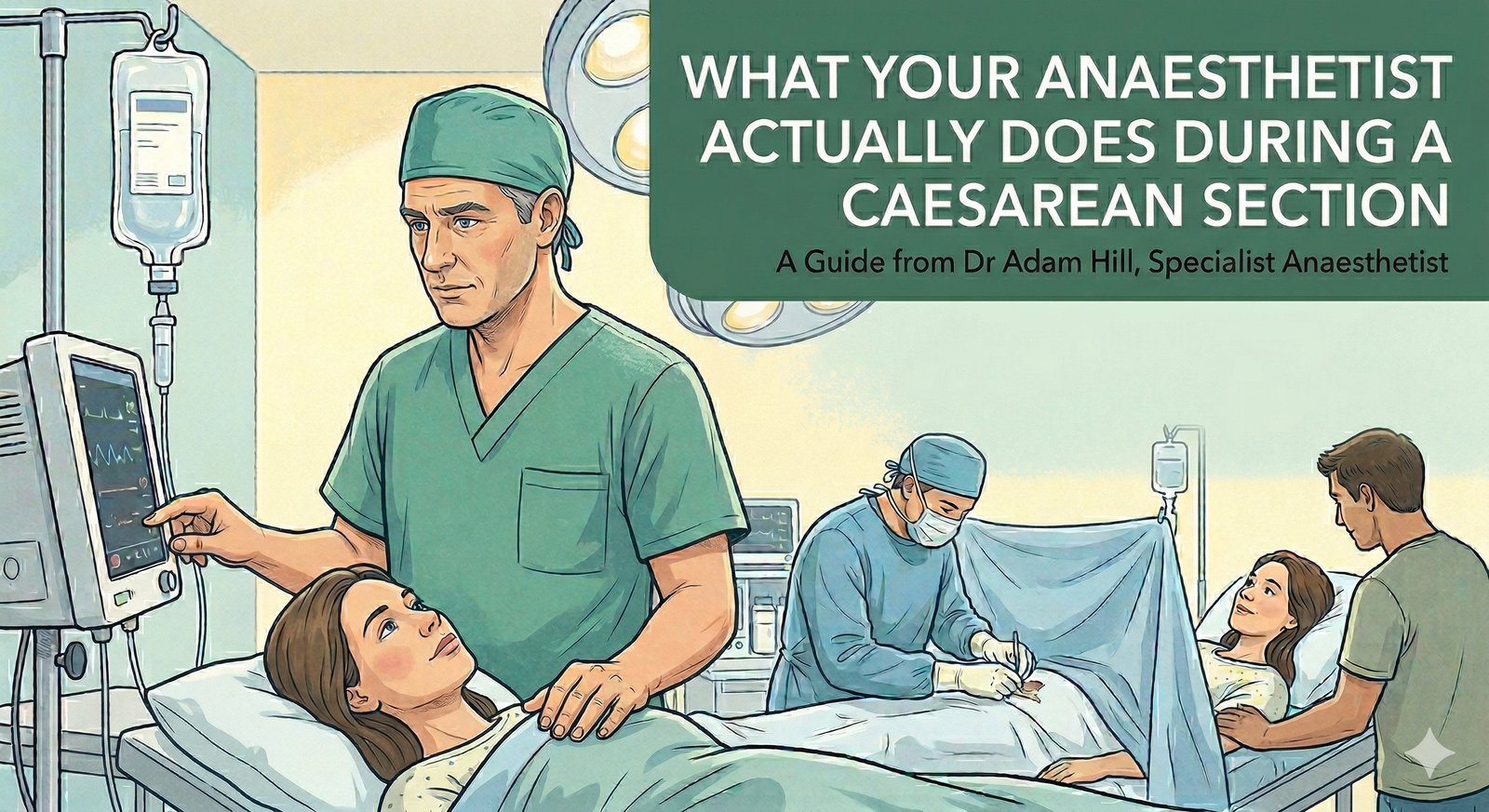
If you are expecting a baby by caesarean section, you have probably spent time thinking about your obstetrician. You may not have given much thought to your anaesthetist. Most people don't, until they are lying on the operating table and realise that the person keeping them comfortable, conscious, and safe is the one standing at the head of the bed.
This is a guide to what actually happens from the anaesthetist's perspective, from the moment you arrive in the operating theatre to the moment you are wheeled into recovery with your baby.
Before the Operation
Your anaesthetist will meet you before the procedure, usually in the pre-operative area. This is not a formality. The conversation covers your medical history, previous anaesthetics, any allergies, your airway anatomy, and your preferences for pain relief during and after the surgery.
For a planned caesarean, the anaesthetist will discuss the type of anaesthetic. In the vast majority of cases, this is a spinal anaesthetic: a single injection in the lower back that numbs the body from the chest down. You remain awake throughout. You can hear your baby's first cry. Your partner can be in the room.
A spinal is preferred over a general anaesthetic for several reasons. It is safer for both mother and baby. It allows immediate skin-to-skin contact. And it avoids the risks associated with managing an airway under general anaesthesia in a pregnant patient, which is one of the higher-risk situations in all of anaesthesia.
If you already have an epidural in place (from labour), the anaesthetist can often top it up to provide surgical anaesthesia without needing a spinal. The decision depends on how well the epidural is working, how urgent the surgery is, and the clinical judgement of the anaesthetist.
During the Operation
Once the spinal is in and working, the anaesthetist's job is far from over. For the next 45 minutes to an hour, they are continuously monitoring and managing:
Your blood pressure. A spinal anaesthetic causes the blood vessels below the block to dilate, which drops blood pressure. This happens in almost every case. The anaesthetist manages it with intravenous fluids and medications, titrated carefully to keep blood pressure stable. A significant drop in blood pressure reduces blood flow to the uterus and the baby, so this is managed actively from the moment the spinal goes in.
Your comfort. You should feel pressure and movement, but not pain. If you feel anything sharp or uncomfortable, the anaesthetist adjusts the block or adds medication. The goal is for you to be relaxed, comfortable, and present for the birth.
Your oxygen levels, heart rate, and breathing. These are monitored continuously. A high spinal block (one that extends higher than intended) can affect breathing. This is rare, but the anaesthetist is trained to manage it immediately if it occurs.
Nausea. This is common during caesarean sections, caused by blood pressure changes and by the sensation of the uterus being manipulated. Anti-nausea medications are given proactively in most cases.
The baby. At the moment of delivery, the anaesthetist is watching the clock. The time from skin incision to delivery matters. Once the baby is out, the anaesthetist's attention shifts briefly to ensure the transition is smooth, then returns to the mother for the remainder of the operation.
Blood loss. Caesarean sections involve more blood loss than most people expect. The anaesthetist monitors this throughout and manages fluid replacement accordingly. In rare cases where bleeding is heavy, the anaesthetist coordinates blood products, additional IV access, and escalation.
After the Operation
The spinal wears off gradually over one to three hours. During this time, the anaesthetist is responsible for your pain management plan. This typically includes a combination of regular paracetamol, anti-inflammatory medications, and longer-acting pain relief. The aim is to stay ahead of the pain so that by the time the spinal wears off, you are comfortable enough to hold your baby, start feeding, and begin moving.
The post-operative pain plan is one of the areas where the anaesthetist has the most direct impact on your recovery experience. Good pain management in the first 24 hours makes a significant difference to mobility, breastfeeding, and overall recovery.
When Things Are Urgent
In an emergency caesarean, the timeline compresses. The anaesthetist may have minutes to assess the patient, establish anaesthesia, and have the mother ready for surgery. If there is already a working epidural, it can be topped up. If not, a spinal can be placed quickly. In the most urgent cases (a category 1 emergency, where the baby needs to be delivered within minutes), a general anaesthetic may be the safest and fastest option.
These are high-pressure situations. The anaesthetist is making rapid decisions about the safest technique for both mother and baby, communicating with the obstetrician and midwifery team, and preparing for any complication. It is one of the most demanding scenarios in anaesthetic practice.
Why It Matters
The anaesthetist's role in a caesarean section is to make the experience as safe and as comfortable as possible. When it goes well, you may not remember much about what they did. That is by design. The best anaesthetic is the one you barely notice.
But the work behind that experience (the blood pressure management, the nausea prevention, the pain relief plan, the quiet vigilance throughout the case) is what allows you to be present, comfortable, and focused on the moment your baby arrives.
If you are preparing for a caesarean, it is worth knowing that your anaesthetist is not just "the person who does the injection." They are the doctor managing your physiology for the entire procedure. And for many anaesthetists, obstetric work is the most rewarding part of what they do.
Dr Adam Hill is a specialist anaesthetist (FANZCA) practising in Sydney and regional NSW. He is one of the highest-volume obstetric anaesthetists on Sydney's North Shore, and flies his own aircraft to deliver specialist services to regional communities.