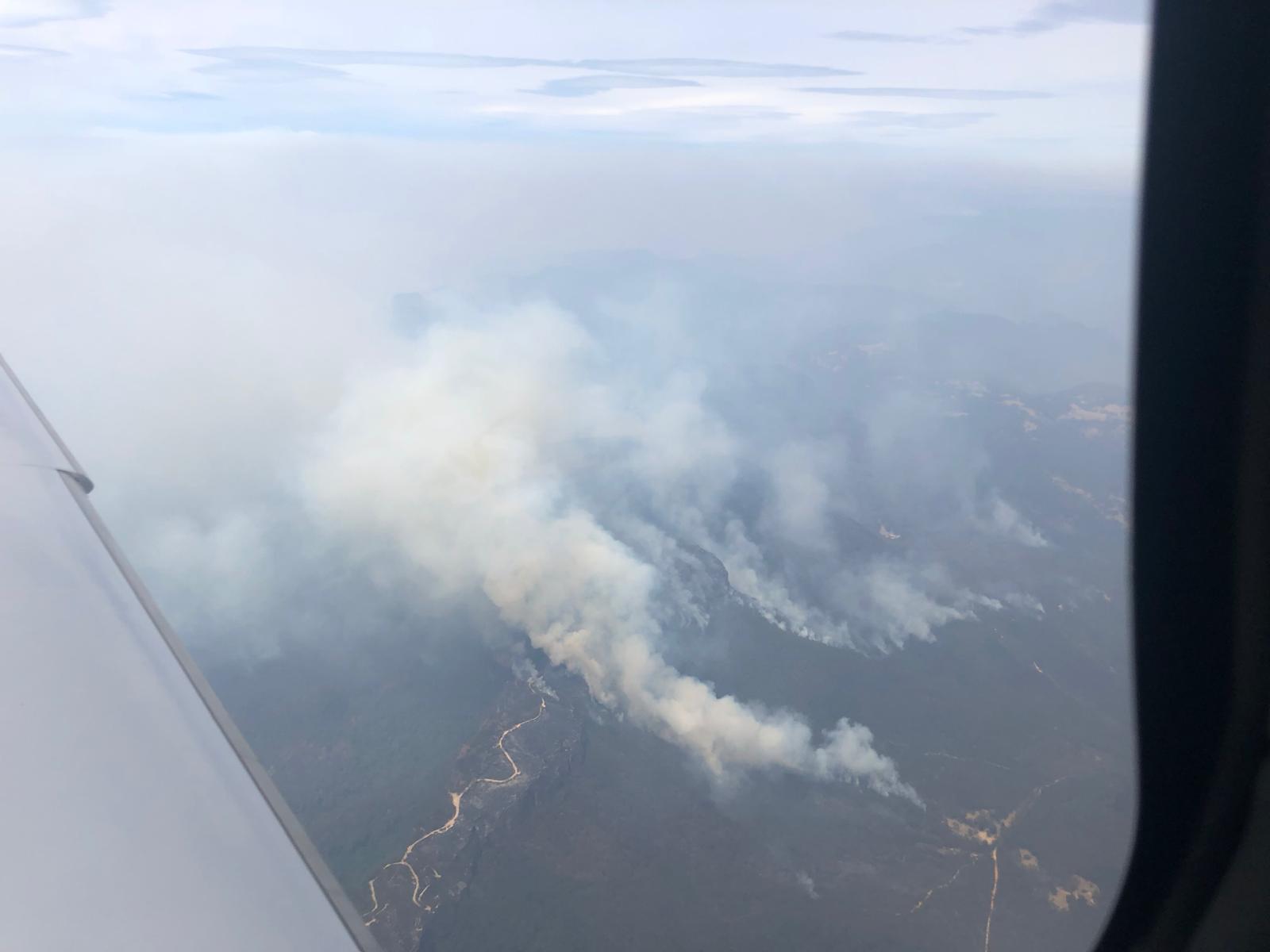
In January 2020, with the roads into Mallacoota cut by the Black Summer fires, a small group of private pilots flew volunteer doctors, health staff and medical supplies into the town in four-seat aircraft. I was one of them, and I helped coordinate the flights. Air was the only way in, the airport was closed to everything except emergency traffic, and the town's medical centre needed more hands than it had.
A town reachable only by air
On New Year's Eve 2019, fire reached Mallacoota, on the far east coast of Victoria. Residents and holidaymakers sheltered on the foreshore while homes burned. In the days that followed, the roads stayed closed, and by mid-January they were still cut. For a town of around a thousand people, swollen by summer visitors, that meant every person, every supply and every relief worker came and went by sea or by air.
A Notice to Airmen (NOTAM) closed Mallacoota's airstrip to all aircraft except emergency flights. The large military transports were coming in to move people and heavy equipment. What was harder to move was a doctor or a nurse who had offered their time and simply had no way to get there.
How it started
I had been following the Mallacoota community forums on social media, as a lot of people were, and I could see health professionals offering to help and asking how to get there. I contacted the local GP, who explained the problem plainly: volunteers were available, the logistics of getting them in were not.
I offered my aircraft and my time to carry volunteer health staff and supplies. The request came on a Friday night. By Saturday morning I had found a second Cirrus pilot and aircraft willing to go at short notice, and we had the authorisation needed to land at a closed airport.
That first day the route was Bankstown to Mallacoota, across to Lilydale on the outskirts of Melbourne to collect health practitioners and supplies, back to Mallacoota, and home to Bankstown. It is a long day in a light aircraft. It is also the kind of trip general aviation is built for: a small strip, a short-notice plan, and a payload measured in people and boxes rather than pallets.
Smoke changes the plan
On another occasion, the RAAF had to divert because of smoke, and a staff member and their equipment were left stranded in Merimbula, on the New South Wales south coast. The next day I was able to organise an aircraft and a pilot to collect them, fly them to Mallacoota, and bring a volunteer doctor home to Sydney on the return leg.
That episode says most of what needs saying about flying in a fire season. Smoke can close a destination as completely as cloud, and it can do it to a military aircraft as easily as to a light one. The answer is the same as any other weather: have more than one plan, and be ready to use the next one tomorrow.
What the doctors on the ground were doing
The local GP had decided to bulk bill every consultation for the following twelve months, and volunteer doctors were arriving from around the country to help carry the extra load. The health needs that come after a fire are not only burns and smoke. They are the ordinary problems of a community that has lost homes, routines and sleep, layered on top of the usual work of a summer practice.
Our part in that was small and specific. We were a transport link. By mid-January three Cirrus aircraft and their pilots had flown in, and I was asking other owners to volunteer, because there would be a need for more.
I have a photo from that period of my aircraft parked at Mallacoota with the military transports around it and service personnel moving across the apron. It is a slightly absurd picture, a four-seat civilian aircraft in among the heavy lift. But at that moment, both were doing a version of the same job.
What general aviation can offer in a disaster
I wrote at the time that it was the least I could do to lend a hand. What firefighters, emergency crews and the people of Mallacoota gave that summer was of a different order.
But the experience left me with a practical view. Australia has privately owned aircraft and pilots spread right across the country. In a disaster, they can move small numbers of skilled people quickly into places that are hard to reach. What they need is coordination: someone on the ground who can say who needs to go where, and a way to get authorisation to land.
That is the lesson I took from Mallacoota. The capacity was there. Matching it to the need is the work.
Dr Adam Hill is a specialist anaesthetist (MBBS, BMedSc, PGCertCU, FANZCA) practising across public and private hospitals in Sydney and regional New South Wales. He is an instrument-rated private pilot. His own account of the Mallacoota flights was published by Cirrus Aircraft Australia in January 2020.