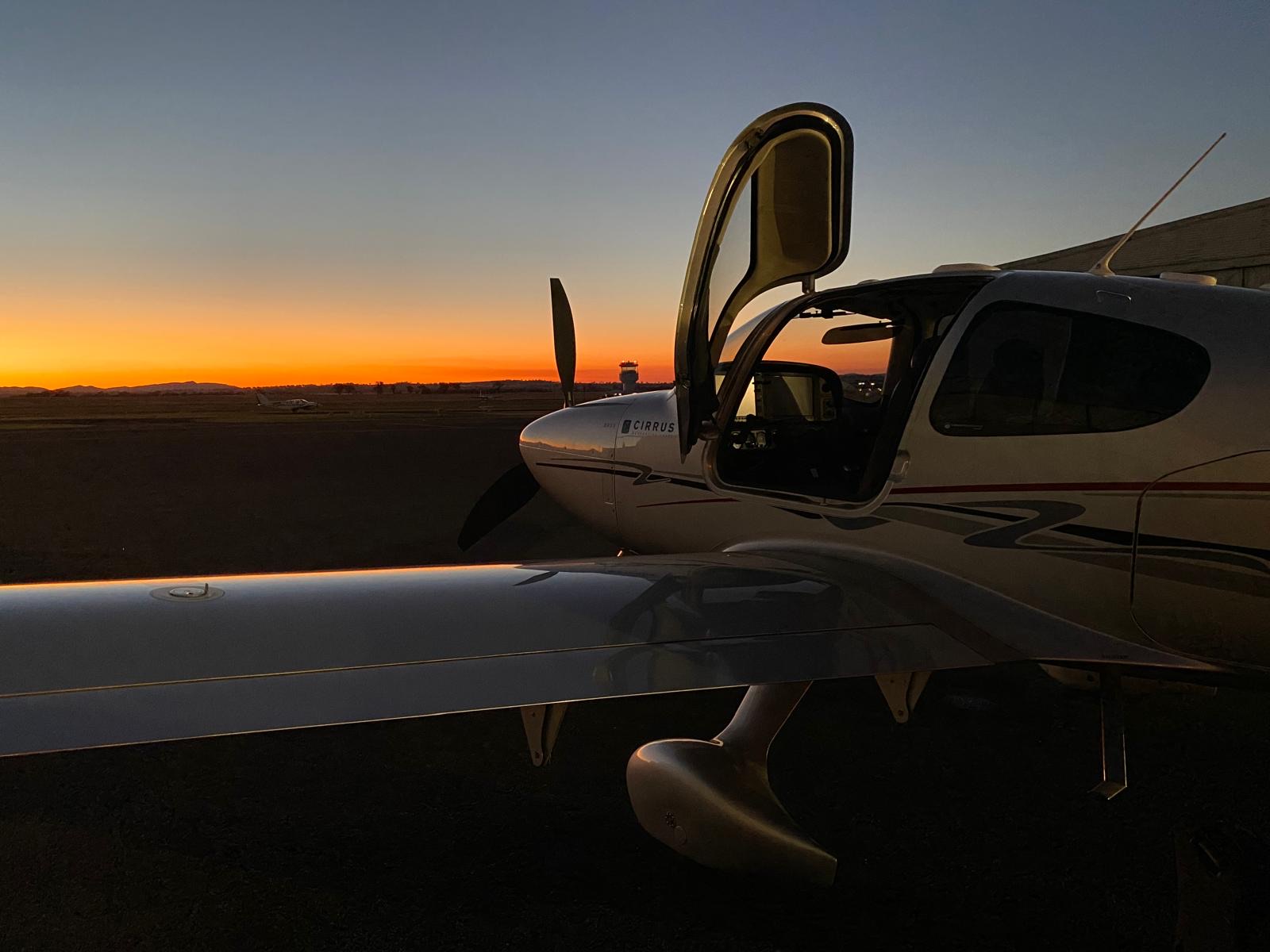
Every second Thursday I fly two or three theatre nurses from Bankstown to Armidale, about 400 kilometres north, for a day-procedure list. I am a specialist anaesthetist, and on those days I am also the pilot. Without the aircraft, the list would not run.
The problem the aircraft solves
Regional New South Wales does not lack patients. What it often lacks, on a given day, is the people who make a list possible: an anaesthetist, and theatre and recovery nurses who can be rostered. A regional facility can have a surgeon, a procedure room and a full book and still struggle to run, because local staff are hard to find. That is the situation in Armidale, and it is why the nurses come with me from Sydney.
The usual alternative is to send patients to the city. For a short procedure, mostly endoscopy, that can mean a long drive each way and a night away for anyone who cannot drive themselves home afterwards. Bringing the team to the patients is simpler, as long as someone can get the team there.
How the day runs
The nurses are on standby the day before while I watch the weather. On the morning, we fly up, run the list through the day, and fly home that evening in the same aircraft. Over the years I have flown to lists in Albury and Griffith as well; Armidale is the current one.
The arrangement works because one person removes two constraints. A charter would still need an anaesthetist at the other end, and there is no commercial flight that gets a team to Armidale for a morning start. When the pilot is the anaesthetist, the transport and the anaesthetic arrive together.
Weather, fog and the instrument rating
Armidale sits at about 3,500 feet, the highest city in Australia, and it is notorious for fog. On some mornings it is simply not possible to land. When the forecast says that, we go up on the Wednesday night and stay over so the list can start on time.
This is where the instrument rating earns its keep. It is the qualification that allows a pilot to fly in cloud and reduced visibility by reference to the instruments alone. A few Thursdays ago we spent the trip home working around thunderstorms on the way back into Sydney. Nothing dramatic happened, and that is the intention. The planning is not very different from a pre-operative assessment: gather the information, decide what has to be true for the plan to work, have a plan B, and decide in advance where the answer is no.
Why I do it
I started flying in 2007, when I was locuming in Orange and commuting from Melbourne. As a registrar, my ambition was always to fly for work, and over the years I have tried to create the circumstances that make that possible.
I would not describe the Armidale list as charity, and it is not. The list pays its way and the aircraft is a working asset. If I am honest, I go up as much for the flying as for the work. But the patients get something real out of it: a list that runs on the day it was booked, in their own town, with an anaesthetist and an experienced theatre team.
The lesson I take from it is a practical one about rural access. The gap is often not money or buildings. It is getting the right people into the room on the day, and sometimes the way to do that is with an aeroplane.
Dr Adam Hill is a specialist anaesthetist (MBBS, BMedSc, PGCertCU, FANZCA) practising across public and private hospitals in Sydney and regional New South Wales. His clinical work covers complex spinal and neurosurgical anaesthesia, obstetric anaesthesia, trauma and emergency surgery, and retrieval medicine.